


Räbeliechtli: Switzerland's turnip lantern festival (Horgen, Richterswil)
When November evenings turn long, dark and bitterly cold, Swiss towns light up with thousands of soft, flickering flames. This is Räbeliechtli, a festival found only in Switzerland – a tradition that turns humble turnips into small works of art.
Until now, large light installations made of thousands of turnips have mostly been associated with the legendary celebration in Richterswil, which is part of Switzerland's intangible cultural heritage.
This year, however, the festival began to glow in another picturesque town on Lake Zurich: Horgen joined the magic of light installations.
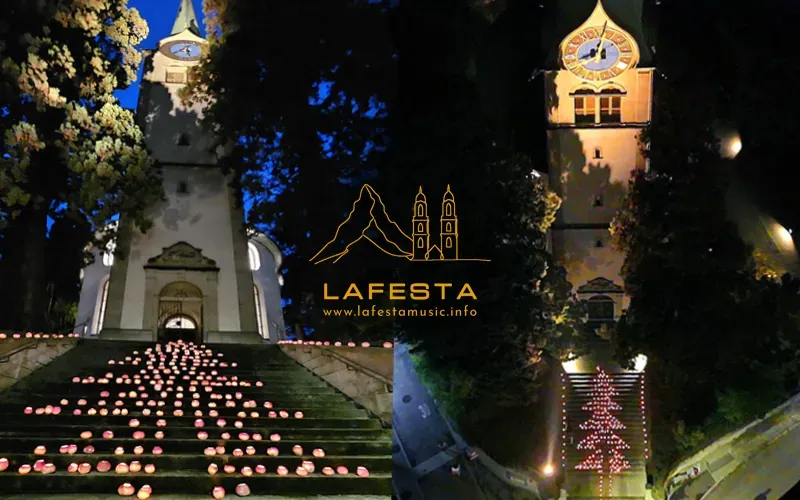
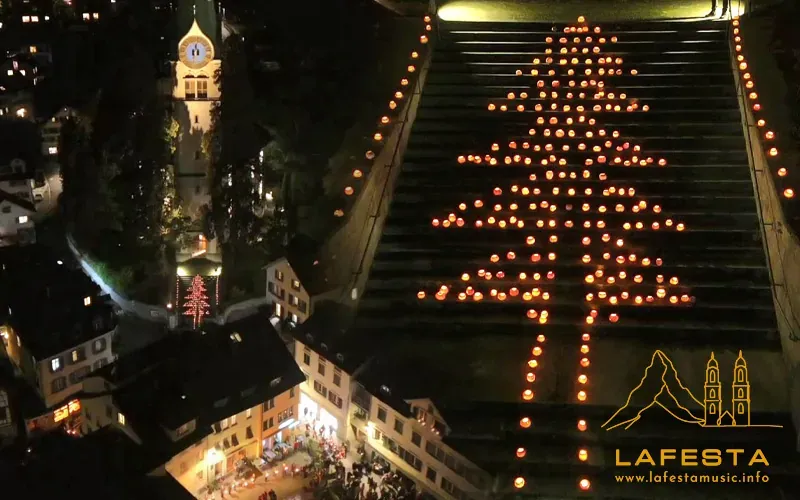
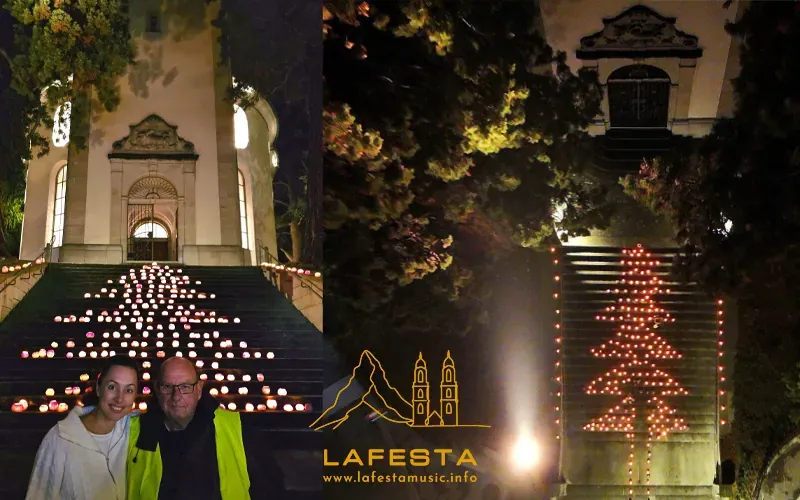
Local residents watched a large-scale installation take shape, turning the monumental steps of the Reformed Church of Horgen (Reformierte Kirche) into a work of light art.
Together, 260 turnip lanterns formed the silhouette of a Christmas tree, and on 7 November 2026 hundreds of people came to see the installation and take photos among the lights.
A nice detail: the spire (weather vane) of the Reformed Church of Horgen carries a sun, a moon and stars, in keeping with the Rococo style in which the church was rebuilt in 1782. These symbols echo the idea of light at the heart of Räbeliechtli.
How the Horgen installation came about
Behind every big project there are real people – their ideas, their inspiration and a great deal of everyday work.
The idea for the large installation on the church steps in Horgen came from Peter Wirt and his wife Monica Wirt.
It was their vision and their love of Swiss traditions that made it happen.
Two Ukrainians who live in Horgen and work with the Reformierte Kirche helped bring the project to life: opera singer Olga Kuksenko (Olga Rossi) and her husband Ihor Kuksenko (VUS dj). Together with Peter, they developed the concept, prepared the sketches and coordinated every stage of the work.
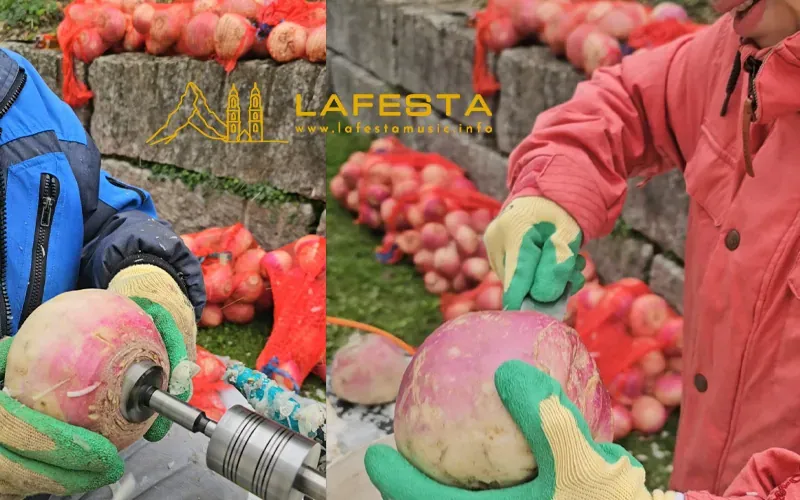
Turning the idea into a technically complex installation of 260 real flames also took hard physical work: scraping out dozens of kilos of firm turnip flesh, setting up the structures and keeping the burning candles on the steps safe throughout the festive evening.
The history of Räbeliechtli
The name comes from «Räbe» (turnip) and «Liechtli» – «little light».
The custom goes back a long way: once the last harvest was in and the fields stood empty, farmers faced the long, dark season ahead.
In those days, long before potatoes and electricity became widespread, the turnip was one of the most important foods and kept people from going hungry in winter.
To thank the earth for the harvest and to «chase away» the coming darkness, people came up with a simple but brilliant ritual.
They hollowed out turnips, carved little windows and patterns into them, placed lit candles inside and set off into the dark streets.
A song in the dark: during the procession, children always sing a traditional song. Its best-known line goes:
«Räbeliechtli, Räbeliechtli, wo gaasch hii? / I di dunkli Nacht use...» («Little turnip light, where are you going? / Out into the dark night...»). The tune has stayed the same for more than a hundred years.
The processions are held around St Martin's Day, 11 November. In practice, you can see these autumn parades from late October and throughout November. The date depends on the town and the organisers: each community may have its own evening.
The Räbeliechtli tradition is especially typical of the canton of Zurich.
Emil Stauber's book «Sitten und Bräuche im Kanton Zürich» (Customs and Traditions of the Canton of Zurich), published in 1922, already describes children's walks with turnip lanterns in the second half of October.
In some places the parade is organised by a kindergarten, in others by a school, a neighbourhood association or the parish.
In one village it is a small circle of families, in another the preparations become a visible part of community life.
On parade nights, many Swiss communities deliberately switch off the street lights in their historic centres.
That way, the soft glow of thousands of turnips creates a truly unique, mysterious, fairy-tale atmosphere.
Today the custom has become one of the most-loved children's festivals.
Yet behind its apparent simplicity lies an enormous amount of handwork that turns an ordinary root vegetable into a fragile lantern.
How a turnip lantern is made
Making Räbeliechtli lanterns is a fun activity that brings children and adults together.
Instead of ordinary fodder turnips, people use a special old variety with two-coloured (purple and white) skin and firm flesh.
Raw turnip flesh is extremely hard. Cutting it with an ordinary kitchen knife risks damaging the walls.
So carvers use special small spoons with sharp edges to scrape out the inside millimetre by millimetre.
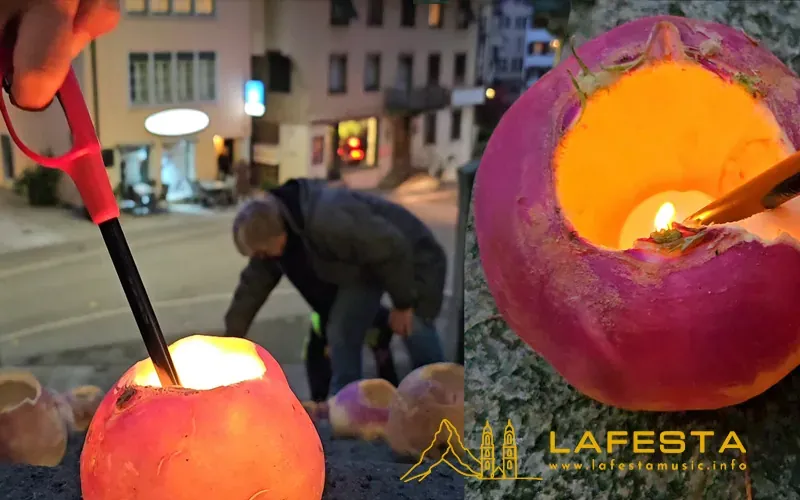
The main goal is to make the walls thin enough for the candlelight to shine through, yet strong enough that the lantern does not fall apart.
Traditional patterns are usually carved into the purple outer layer as well: stars, the moon, the sun, leaves or animal silhouettes.
Once the candle inside is lit, the turnip becomes a magical flickering lampshade.
Unlike modern plastic lanterns or battery-powered lights made in China, Räbeliechtli are 100% eco-friendly. After the festival, the turnips are usually fed to farm animals or composted. No plastic waste at all!
Räbeliechtli in Richterswil
Although the tradition began as a small, intimate celebration, Räbeliechtli in Richterswil has grown into a grand festival: dozens of tonnes of turnips are used and more than 50,000 candles are lit at once, drawing visitors from all over the world.
The turnip lantern parade in Richterswil (Räbechilbi Richterswil) is considered the largest turnip lantern parade in Europe, and the Swiss Federal Office of Culture has included it in its list of «Living Traditions of Switzerland».
It is not only about the moving line of lights. The historic centre is decorated too: windows, facades and individual buildings glow.
For one evening, the whole town becomes part of a shared composition.
Local associations build large figures out of turnips: an owl, Mickey Mouse, Freddie Mercury and many more.
In November 1998, the Richterswil parade officially entered the Guinness Book of Records as the largest turnip lantern procession in the world. From the official Guinness World Records certificate (14 November 1998): «The people of Richterswil-Samstagern held the Räbechilbi on 14 November 1998 – a lantern parade with 24 tonnes of hollowed-out autumn turnips and 40,000 candles.»
The history of Räbeliechtli in Richterswil goes back to the 19th century, when farm women lit their way down from the hills to evening church services with turnip lanterns.
The oldest surviving written record of the festival being officially held is kept in the Richterswil municipal archives:
from the Richterswil community chronicle (1901): «...am Sonntag vor Martini [findet] die Räbechilbi wieder statt.» («...on the Sunday before St Martin's Day, the Räbechilbi will take place again.»)
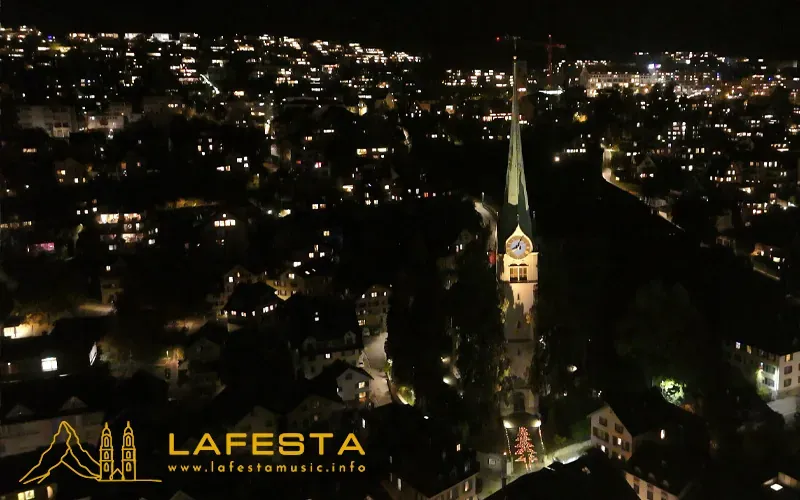
Räbeliechtli in Horgen showed what really matters: an ordinary November evening and a few people ready to come together, share an idea and get to work are enough to create a small miracle. The candles will go out and the steps will be just steps again, but this familiar place now holds one more warm memory.


